Grades 6-12 (Game)
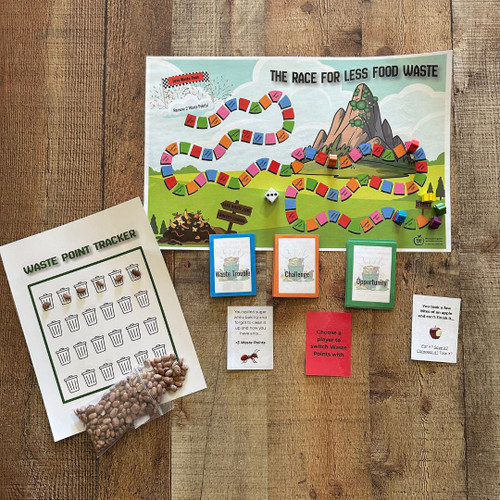
Make food sustainability fun with this fast-paced board game! Students build awareness of food waste as they race to reach the finish line with the least amount of waste.
The Race for Less Food Waste Game is available in two versions: Elementary (Grades 3-5) and Secondary (Grades 6-12). Each version features age-appropriate questions and challenges designed to match students' grade levels while reinforcing key food waste reduction concepts.
Players roll a die, move around the colorful game board, and draw opportunity, challenge, and waste trouble cards that encourage critical thinking about food choices and reducing waste. The interactive format helps students understand how everyday actions—like planning meals, storing food properly, and using leftovers—can make a difference. Each board includes materials for up to six students to play at once.
Kit Contents
- Race for Less Food Waste game board (11" × 17")
-
Opportunity, Challenge, and Waste Trouble cards
- Game pawns and die
- Instructions and materials list
- Game Card Answer and Scoring Guide
- Student Group Score Sheet
Lesson Connections
Extend learning beyond the game with the Race for Less Food Waste lesson plans. The lesson and game work together to help students investigate food systems, sustainability, and strategies for reducing food waste. Additional supporting resources are available through the National Agricultural Literacy Curriculum Matrix.
Looking for a Print-Your-Own Version?
Prefer to print the game yourself? Download the Race for Less Food Waste game files and lesson plan below. The downloadable version includes everything needed to print, prepare, and play the game in your classroom.
Extend the Learning
Have students track food waste at home or school, develop waste-reduction solutions, or create awareness campaigns that encourage others to make more sustainable food choices. These activities help students connect classroom learning to real-world action and reinforce the importance of reducing food waste every day.